


Alarm Bells Ring to Guard the Bottom Line, Strict Rectification Ensures Safety — Company Comprehensively Launches Special Rectification Action for Ship Repair and Construction Safety
Release time:2026-09-15 Click:168
To deeply learn from the lessons of the recent major fire accident in the ship repair and construction industry, resolutely prevent and curb major and extraordinarily serious safety accidents, and effectively protect the lives and property of employees, Zhoushan Huafeng Shipbuilding & Repair Co., Ltd. has acted promptly to comprehensively launch a special rectification action for ship repair and construction safety at its two major bases in Baiquan and Daishan, investigating and addressing various safety hazards with a "zero tolerance" attitude, and strictly and solidly building a strong line of defense for work safety.
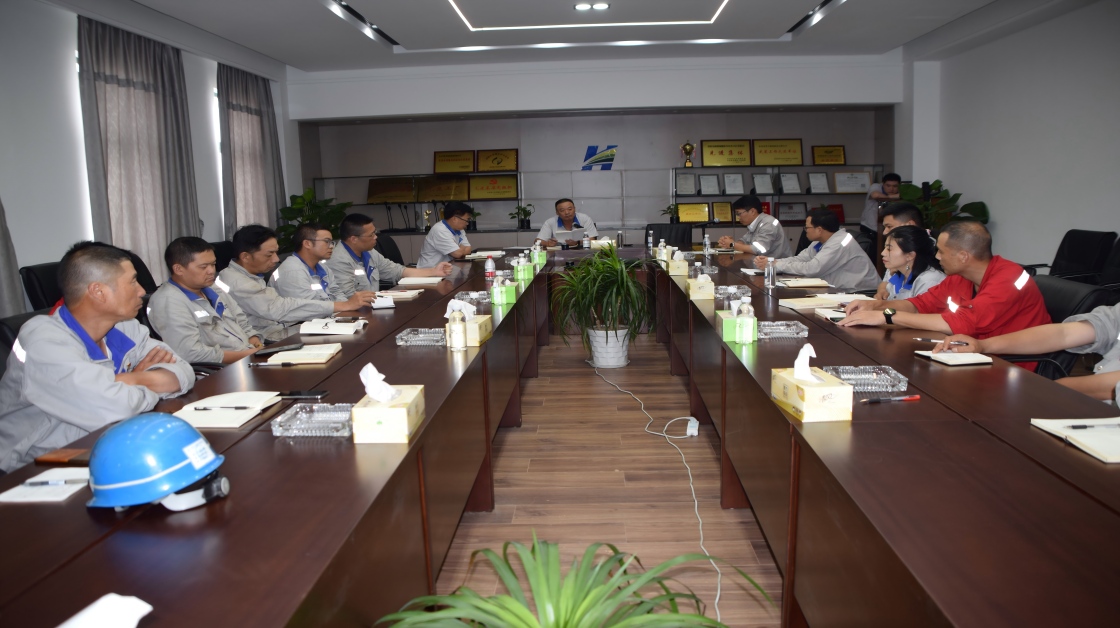
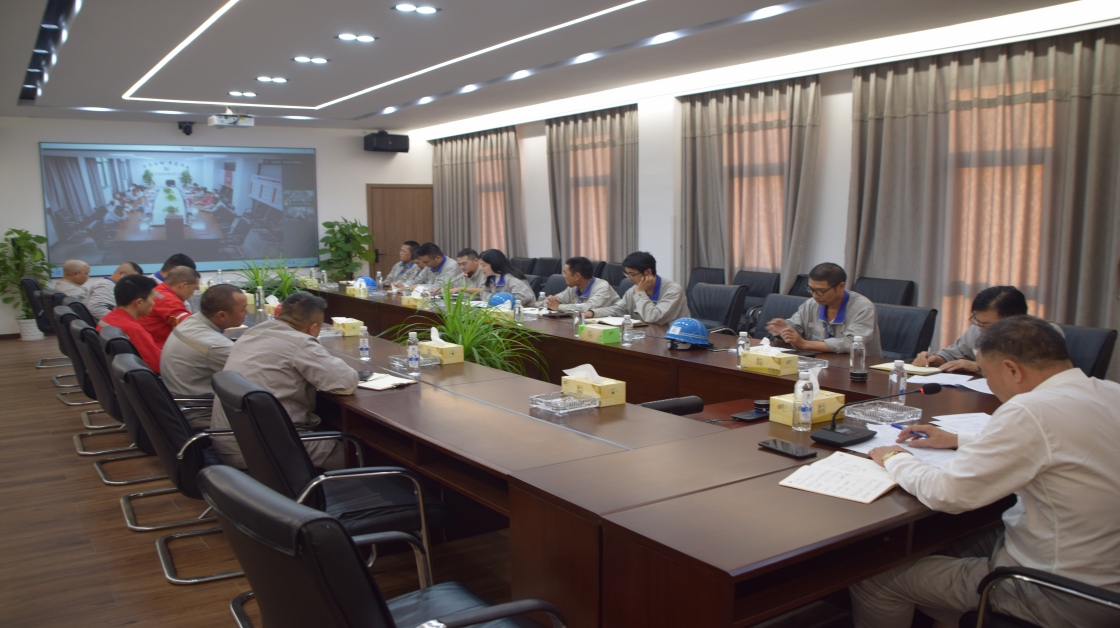
The company attaches great importance to this special rectification. It immediately held a special warning education meeting on the cargo ship fire accident at Qingdao Beihai Shipyard in Shandong Province, briefing the accident process and painful lessons, and established a leading group for the work safety special rectification action, with Chairman Wu Zhixiang as group leader and Deputy General Managers Shu Kaifeng and Zhou Bingke as deputy group leaders, coordinating safety management personnel from the Baiquan and Daishan bases to advance collaboratively. The rectification action is implemented in three stages: warning education and self-inspection, centralized rectification and re-inspection, and long-term consolidation and improvement. It will be executed on a long-term normalized basis from now on, ensuring the rectification does not go through the motions and leaves no dead corners.
This special rectification focuses on high-incidence fatal risks in the ship repair and construction industry, precisely targeting five key areas: hot work, confined space operations, on-site monitoring, fire emergency response, and hazardous chemicals and temporary electricity use. In terms of hot work control, the company has upgraded hot work approval in engine rooms and living quarters to Level II strict control, implementing double confirmation and signature by the vessel manager and safety supervisor. It requires thorough cleaning of oil stains before operations, comprehensive isolation and sealing of adjacent oil tanks, and a 30-minute on-site stay for delayed re-inspection after hot work, resolutely eliminating unapproved and out-of-scope hot work. In terms of confined space operations, the company rigidly enforces the iron rule of "ventilate first, then test, then operate," maintaining continuous mechanical ventilation throughout the operation, regularly retesting combustible gas, toxic gas, and oxygen content, and assigning full-time guardians outside the cabin who remain on duty throughout. Meanwhile, the company comprehensively inspects the unobstructed condition of escape routes, strictly prohibiting any personnel from privately closing, locking, or blocking engine room escape hatches and safety exits, ensuring emergency channels remain open, visible, and unobstructed at all times.
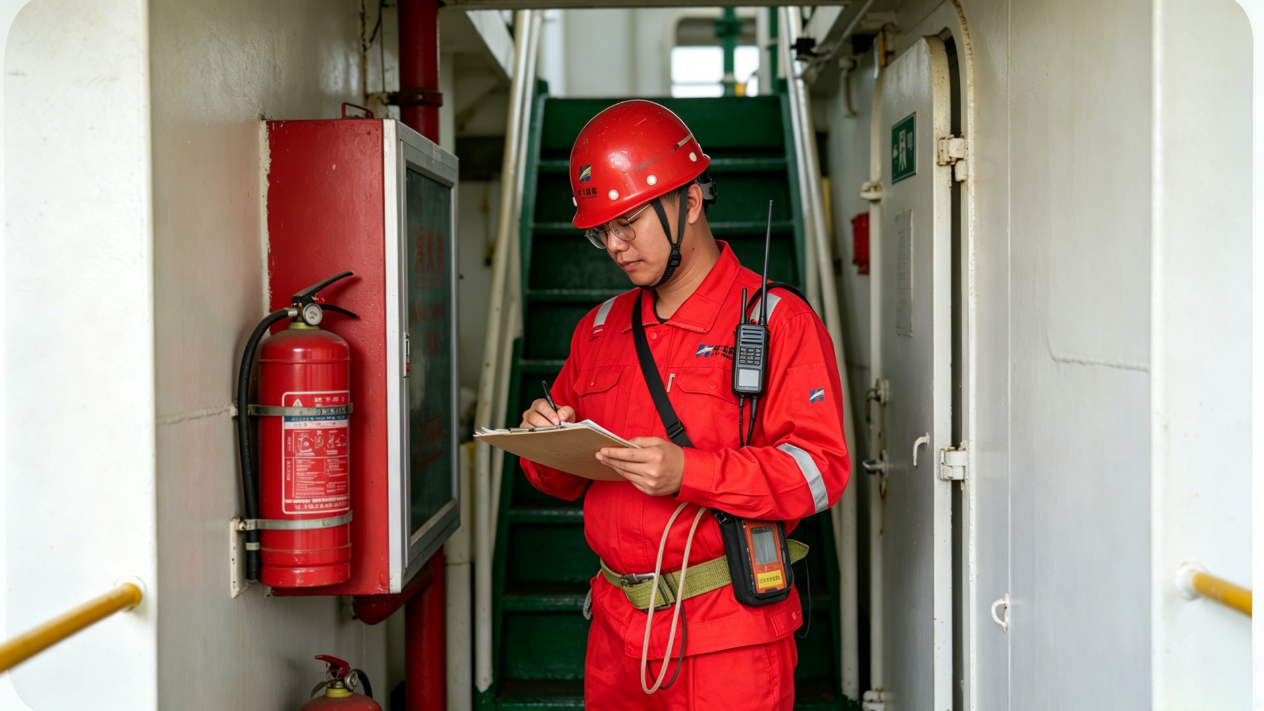
On September 12, the company organized a major safety inspection for the "city-wide special rectification in the ship repair and construction field," going deep into various vessels under repair and production workshops at the Baiquan Base, focusing on key links such as overhead pipelines, unobstructed channels, fire-fighting equipment, confined space testing, and temporary electricity use. A total of 56 problems were identified, covering multiple vessels under repair such as Lucky Star, New Adventure, Furui, Sograssier, Vladivostok, and Apollo. For problems found during the inspection, such as blocked engine room channels, damaged and leaking cutting torch belts, failure to use special blind plates for hydraulic pipes, and unlocked carbon dioxide rooms, responsible persons and rectification time limits were specified on site. The vast majority of problems were rectified on the same day, and the rest will be closed and written off within the prescribed time limit. Meanwhile, the company has intensified the investigation and punishment of on-site violations. Recently, a total of 36 cases of various illegal operations have been investigated and punished, involving typical violations such as unauthorized hot work without approval, failure to wear safety harnesses during work at heights, entering confined spaces without approval, and bringing cigarettes onto vessels. All have been seriously assessed and criticized through circular notices, forming a strong deterrent.
To achieve the rectification goals of "three thoroughnesses and three prohibitions," the company has comprehensively consolidated the three-level safety responsibilities of vessel, work area, and team, and simultaneously carried out multiple rounds of special safety education and training: First, taking the Qingdao Beihai Shipyard fire accident as the core case, organizing company-wide special warning education, deeply analyzing the root causes and common problems of the accident, so that everyone is aware and alarm bells keep ringing; second, carrying out special training on fire safety knowledge, systematically explaining practical skills such as fire prevention, fire extinguisher operation, and emergency evacuation and escape; third, incorporating accident warnings and safety briefings into the normalized learning of pre-shift meetings, combining 14 typical accidents of confined space and cabin operations in Zhoushan's ship repair and construction industry in recent years to strengthen frontline employees' risk identification and self-protection awareness. The company clearly requires that for serious violations found during inspections, such as hot work without a permit, guardians leaving their posts, and illegal entry into confined spaces, work must be immediately stopped and seriously assessed. For serious cases, construction teams will be dismissed and accountability strictly pursued.
Work safety is always on the road. The company will take this special rectification as an opportunity to continuously maintain a high-pressure safety management and control posture, address shortcomings in on-site safety management, standardize high-risk operation processes, resolutely guard the bottom line of zero work safety accidents, and provide a solid safety guarantee for the high-quality development of the enterprise.




Official wechat public account


